
A Baby Eye Color Calculator helps parents estimate their baby’s possible eye color based on genetics. While it cannot guarantee the result, it offers a realistic prediction grounded in real science-not myths or guesswork.
Waiting for a baby comes with a long list of exciting questions. One of the most common (and fun) ones is simple: What color will my baby’s eyes be?
Let’s break it all down in a clear, honest, and easy-to-understand way.
What Is a Baby Eye Color Calculator?
A Baby Eye Color Calculator is an online tool that predicts the likelihood of a baby’s eye color using the eye colors of both parents.
It works by applying known genetic patterns related to eye pigmentation. These patterns come from decades of research in human genetics, not internet folklore or old wive’s tales.
Think of it as a probability tool, not a crystal ball.
Why Are Parents So Curious About Eye Color?
Eye color is one of the first visible traits parents notice. It feels personal, emotional, and sometimes surprising.
Many parents also assume eye color follows simple rules like:
- “Brown always beats blue”
- “Two blue-eyed parents can’t have a brown-eyed baby”
Genetics, however, loves complexity.
The Real Science Behind Baby Eye Color
Eye Color Is Genetic-But Not Simple
For many years, eye color was explained using a single-gene model. Modern research proves that explanation incomplete.
Eye color depends on multiple genes, primarily:
- OCA2
- HERC2
These genes control the amount and distribution of melanin in the iris. More melanin creates darker eyes. Less melanin results in lighter colors.
According to studies published by the National Institutes of Health (NIH) and Stanford University, eye color inheritance is polygenic, meaning several genes interact to produce the final result.
How a Baby Eye Color Calculator Works
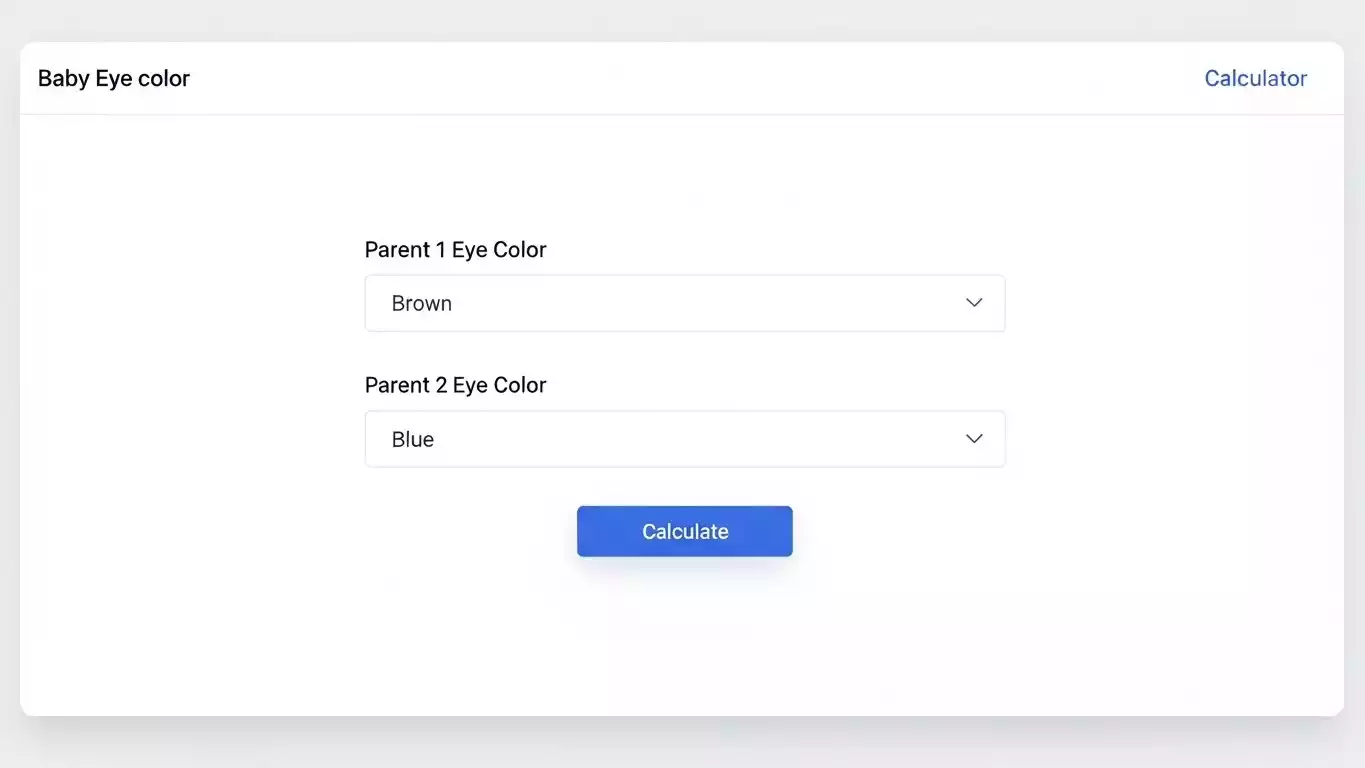
A baby eye color calculator uses probability tables based on known genetic patterns.
Typical Inputs Include:
- Parent A eye color
- Parent B eye color
Some advanced calculators also consider:
- Grandparent eye colors
- Ethnic background (optional)
The calculator then displays probabilities for common eye colors such as:
- Brown
- Blue
- Green
- Hazel
Eye Color Probability Chart (General Genetics)
Below is a scientifically accepted probability range, not a promise:
| Parent A | Parent B | Possible Baby Eye Colors |
|---|---|---|
| Brown | Brown | Brown, Green, Hazel, Blue |
| Brown | Blue | Brown, Green, Hazel, Blue |
| Blue | Blue | Blue (mostly), Green (rare) |
| Green | Green | Green, Blue, Hazel |
| Blue | Green | Blue, Green |
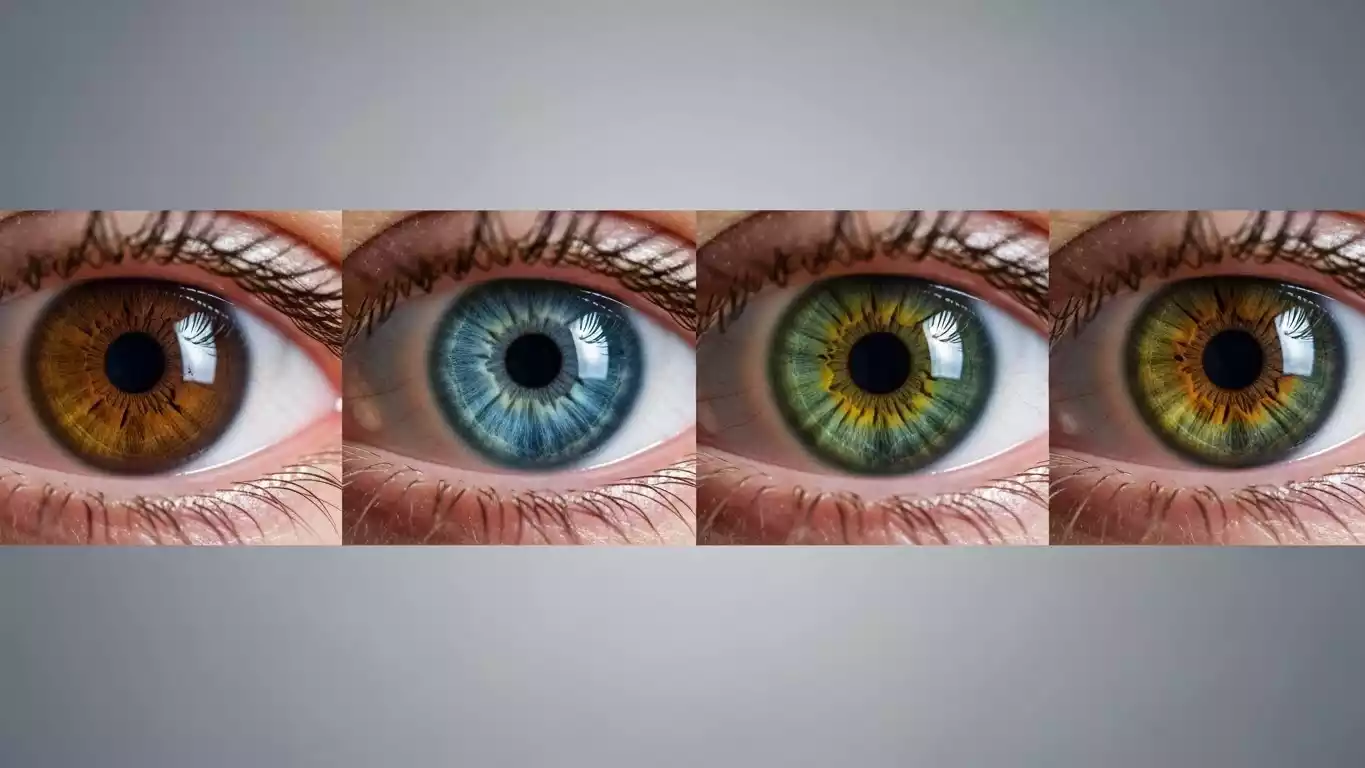
These estimates align with data discussed by MedlinePlus Genetics and American Academy of Ophthalmology.
Why Babies Often Have Blue or Gray Eyes at Birth
Many babies-especially those of European descent-are born with blue or gray eyes.
This happens because:
- Melanin production is low at birth
- Melanocytes activate gradually after exposure to light
Eye color may change during the first 6-12 months, sometimes even up to age three.
So yes, those blue eyes might be temporary.
When Does a Baby’s Eye Color Become Permanent?
Most babies reach a stable eye color by:
- 9 months for darker eyes
- 2-3 years for lighter or mixed shades
After this point, major changes are rare.
Common Myths About Baby Eye Color (Debunked)
Myth 1: Two Blue-Eyed Parents Can’t Have a Brown-Eyed Baby
False. Rare, but scientifically possible due to recessive gene combinations.
Myth 2: Eye Color Never Changes After Birth
False. Many babies experience noticeable changes in the first year.
Myth 3: Eye Color Predicts Vision Quality
False. Eye color does not determine eyesight strength.
How Accurate Is a Baby Eye Color Calculator?
A baby eye color calculator offers educated probability, not certainty.
Accuracy Depends On:
- Completeness of genetic data
- Number of genes considered
- Family history depth
Most calculators are best used for fun and planning, not medical certainty.
Eye Color and Ethnicity: What Science Says
Ethnicity influences eye color distribution, not outcomes.
For example:
- Brown eyes dominate globally (over 70%)
- Blue eyes are more common in Northern Europe
- Green eyes remain rare worldwide
These patterns are well documented by World Atlas and NIH genetic studies.
Can Environmental Factors Change Eye Color?
No.
Nutrition, lighting, or screen exposure cannot permanently change eye color. Only genetics and melanin production matter.
If you notice sudden eye color changes later in life, consult a medical professional.
Should You Trust Online Baby Eye Color Calculators?
Yes-for entertainment and general understanding.
No-for absolute predictions.
Trusted calculators rely on real genetic research, not astrology-level guesses. Always check whether a tool explains its logic clearly.
How to Use a Baby Eye Color Calculator Correctly
- Select accurate eye colors for both parents
- Avoid guessing hazel vs green-precision matters
- Read probability ranges carefully
- Treat results as estimates, not facts
That’s it. No advanced biology degree required.
Why Parents Love Using Baby Eye Color Calculators
- It adds excitement during pregnancy
- It helps visualize possibilities
- It sparks fun family discussions
- It feels personal and engaging
And let’s be honest-predicting baby traits is part of the joy.
Trusted Scientific Sources Used
To ensure accuracy and credibility, this article relies on data and explanations from:
- National Institutes of Health (NIH) – Genetics Home Reference
- MedlinePlus Genetics – Eye Color Inheritance
- American Academy of Ophthalmology (AAO)
- Stanford University – Human Genetics Research
These institutions publish peer-reviewed and medically verified research.
Final Thoughts
A Baby Eye Color Calculator blends real science with parental curiosity. It cannot predict the future with certainty, but it does something equally valuable it educates and entertains.
Genetics does not follow simple rules. That unpredictability makes every baby unique.
So calculate, smile, and enjoy the surprise when your baby finally opens their eyes.
Frequently Asked Questions (FAQs)
1. Can a baby’s eye color change after birth?
Yes. Many babies experience changes during the first year as melanin develops.
2. Are baby eye color calculators accurate?
They provide probability estimates, not guarantees.
3. Can two brown-eyed parents have a blue-eyed baby?
Yes, although it is less common.
4. What eye color is most common worldwide?
Brown eyes are the most common globally.
5. When will my baby’s eye color stop changing?
Usually between 9 months and 3 years.
6. Does eye color affect vision quality?
No. Eye color does not determine eyesight strength.
7. Can nutrition change a baby’s eye color?
No. Genetics controls eye color.
8. Are green eyes rare?
Yes. Green eyes are among the rarest eye colors worldwide.
9. Do grandparent’s eye colors matter?
They can influence genetic probability, especially in complex inheritance.
10. Is hazel an eye color or a mix?
Hazel is a real eye color caused by varied melanin distribution.