
Eating the “right” number of calories shouldn’t feel like solving a math exam after a long day. Yet many people still struggle with one simple question: how many calories should I eat per meal each day? That’s exactly where an Average Calories Per Meal Per Day Calculator becomes useful. It turns nutrition science into clear numbers you can actually use-without guesswork, guilt, or extreme rules.
This guide explains how calorie-per-meal calculators work, why they matter, and how to use them correctly. I’ll keep things clean, human, logical, and grounded in trusted nutrition science. I’ll also sprinkle in a little humor, because food planning shouldn’t feel like punishment.
What Is an Average Calories Per Meal Per Day Calculator?
An Average Calories Per Meal Per Day Calculator helps you divide your total daily calorie needs into manageable portions across meals and snacks.
Instead of staring at a daily target like 2,200 calories and wondering what that means at breakfast, lunch, or dinner, the calculator does the math for you.
In simple terms, it helps you:
- Understand how many calories to eat per meal
- Match calorie intake with meal frequency
- Balance calories with macronutrients (carbs, protein, fat)
- Avoid under-eating or over-eating by accident
Think of it as a budgeting app-but for food.
Why Calories Per Meal Matter More Than You Think
Your body doesn’t process calories once per day like a phone charging overnight. It responds continuously to energy intake.
Here’s why meal-level calorie planning works:
- It supports stable energy levels
- It reduces extreme hunger and cravings
- It helps with muscle maintenance and recovery
- It encourages consistent eating habits
Research from the National Institutes of Health (NIH) and Harvard T.H. Chan School of Public Health shows that evenly distributed calorie and protein intake can improve satiety and metabolic health.
In short, spacing calories intelligently helps your body work with you, not against you.
How Daily Calorie Needs Are Calculated
Before you calculate calories per meal, you need a reliable daily calorie estimate.
Most calorie calculators rely on:
- Basal Metabolic Rate (BMR)
- Total Daily Energy Expenditure (TDEE)
These formulas use well-established equations like Mifflin-St Jeor, which the Academy of Nutrition and Dietetics recognizes as accurate for most adults.
Factors that influence daily calories:
- Age
- Gender
- Height
- Weight
- Activity level
- Health goals (maintenance, fat loss, muscle gain)
Once you have a daily total, dividing it across meals becomes easy-and far more practical.
Example: Calories Per Meal Based on 2,200 Daily Calories
Let’s use a realistic example similar to the calculator shown above.
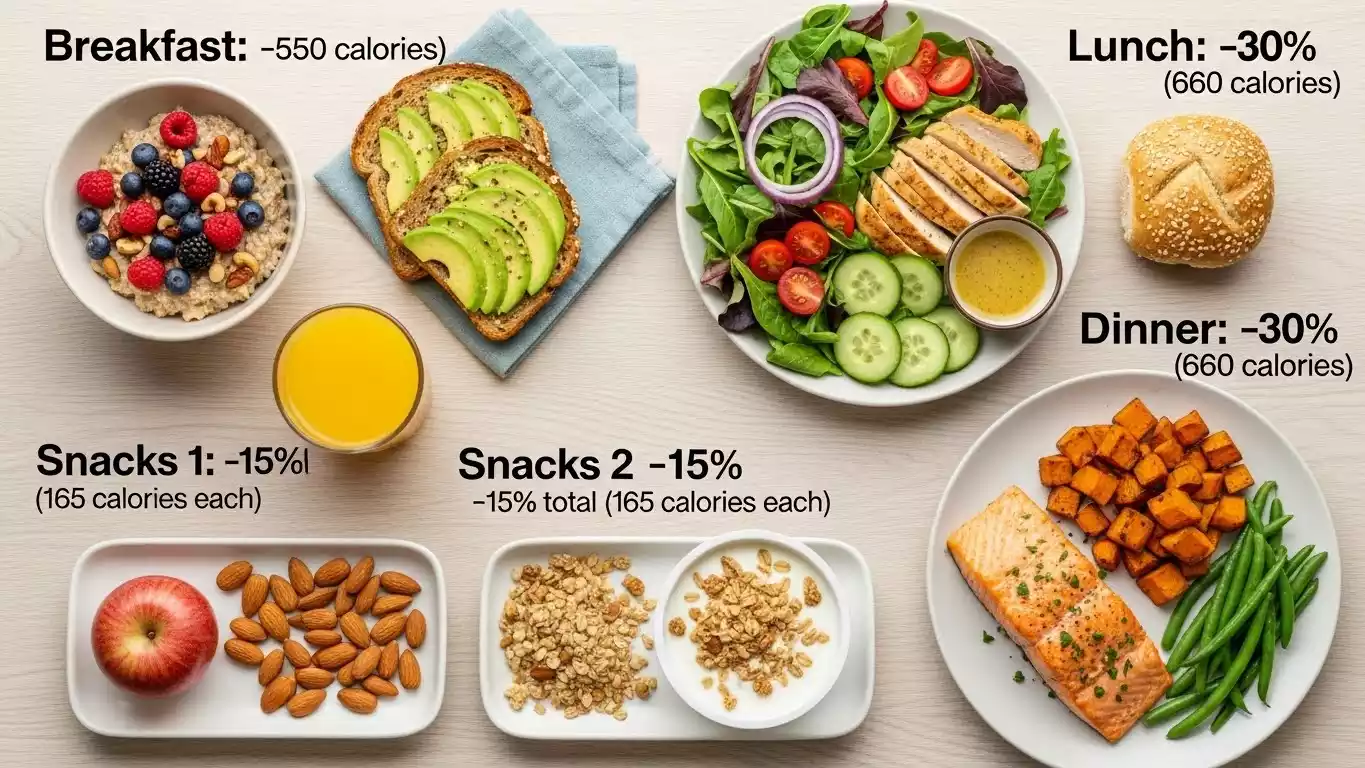
Daily calories: 2,200
Meal frequency: 3 meals + 2 snacks
A common, evidence-based approach looks like this:
- Breakfast: ~25% (550 calories)
- Lunch: ~30% (660 calories)
- Dinner: ~30% (660 calories)
- Snacks (2): ~15% total (165 calories each)
This structure aligns with guidance from the USDA Dietary Guidelines for Americans, which recommend balanced intake across the day.
No meal feels starved. No snack turns into a regret spiral.
Macronutrients: Calories Are Not All Equal
Calories tell you how much energy you eat. Macronutrients tell you what kind of energy.
A solid Average Calories Per Meal Per Day Calculator includes macro ratios because food quality matters.
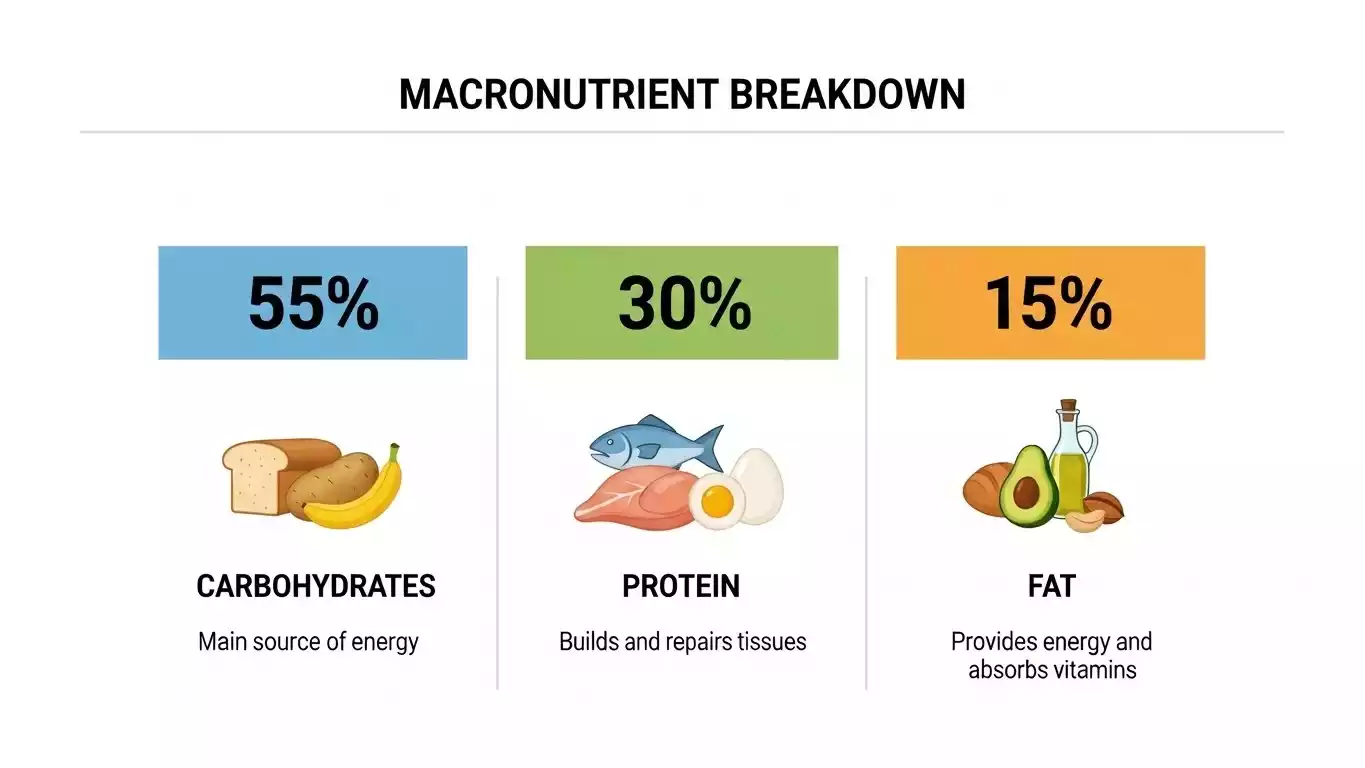
Common macronutrient calorie values:
- Carbohydrates: 4 calories per gram
- Protein: 4 calories per gram
- Fat: 9 calories per gram
The example calculator shows:
- 35% carbohydrates
- 50% protein
- 15% fat
That’s a high-protein setup, often used for muscle retention and satiety. Studies published in the American Journal of Clinical Nutrition support higher protein intake for appetite control and lean mass preservation.
Why Meal Frequency Changes Everything
Eating frequency affects how your daily calories distribute-not how “good” or “bad” your diet is.
Popular meal patterns include:
- 3 meals per day
- 3 meals + 1 snack
- 3 meals + 2 snacks
- Intermittent fasting windows
The International Society of Sports Nutrition (ISSN) notes that meal frequency matters less than total intake, but structured meals help people stay consistent.
Translation:
Choose a pattern you can actually follow.
Benefits of Using a Calories Per Meal Calculator
A calculator removes emotional eating math. It replaces it with logic.
Key benefits include:
- Clear portion expectations
- Better meal planning
- Reduced binge-and-restrict cycles
- Improved consistency over time
And consistency beats perfection every single time.
Your body prefers “predictable and adequate” over “random and extreme.”
Who Should Use an Average Calories Per Meal Calculator?
This tool isn’t just for fitness influencers and spreadsheet lovers.
It works well for:
- Busy professionals
- People new to calorie tracking
- Athletes managing performance nutrition
- Anyone rebuilding a healthy relationship with food
According to the CDC, structured eating plans improve adherence and long-term outcomes. Structure doesn’t mean rigidity-it means clarity.
Common Mistakes to Avoid
Even the best calculator can’t save you from human habits. Watch out for these traps:
1. Ignoring snacks
Snacks count. Your body notices them. Your calculator should too.
2. Obsessing over exact numbers
Calories are estimates, not courtroom evidence.
3. Skipping protein at meals
Protein supports muscle, hormones, and satiety. The science is clear.
4. Changing plans daily
Consistency matters more than novelty.
If your calculator gives you a plan, follow it long enough to learn from it.
Calories Per Meal vs. Intuitive Eating
These two ideas don’t fight each other. They often work better together.
A calculator teaches awareness. Intuitive eating uses that awareness wisely.
Many dietitians, including those from Harvard Health Publishing, encourage combining structure with body cues-especially for people recovering from chaotic eating patterns.
Think of the calculator as training wheels, not a life sentence.
Real-World Application: Making It Sustainable
Numbers only matter if they fit real life.

Tips for daily use:
- Build meals around protein first
- Use calorie ranges, not fixed targets
- Allow flexibility for social meals
- Adjust as activity levels change
Your calculator sets direction. You still steer.
Frequently Asked Questions (FAQs)
How accurate is an Average Calories Per Meal Per Day Calculator?
It provides educated estimates based on validated formulas. Individual metabolism still varies, so treat results as guides-not absolutes.
Can I lose weight using calories per meal calculations?
Yes. Research consistently shows that maintaining a calorie deficit over time leads to fat loss, according to the NIH and CDC.
Should every meal have the same calories?
Not necessarily. Many people eat lighter breakfasts and larger dinners. Balance across the day matters more than symmetry.
Do I need to track calories forever?
No. Many users transition to visual portions once habits stabilize. The calculator helps build that foundation.
Is high protein safe?
For healthy adults, higher protein intakes fall within safe ranges, as confirmed by the International Society of Sports Nutrition. Medical conditions may require individual guidance.
Trusted Sources Used
To ensure accuracy and trust, this article aligns with data and guidance from:
- Centers for Disease Control and Prevention (CDC)
- USDA Dietary Guidelines for Americans
- National Institutes of Health (NIH)
- Harvard T.H. Chan School of Public Health
- Academy of Nutrition and Dietetics
- American Journal of Clinical Nutrition
- International Society of Sports Nutrition (ISSN)
No guesswork. No fake stats. Just solid science.
Final Thoughts
An Average Calories Per Meal Per Day Calculator doesn’t control your eating-it clarifies it.
It turns abstract numbers into practical meals. It replaces confusion with structure. And it supports better decisions without moral judgment.
Food should fuel your life, not complicate it. With the right calculator and a little common sense, you can eat smarter, feel better, and still enjoy your meals.
Yes, even dessert.