Understanding area measurements sounds simple-until you actually need to convert them. Square feet, square meters, acres, hectares, etc. suddenly it feels like math class all over again. This is where an area converter becomes useful, reliable, and honestly, sanity-saving.
An area converter helps you convert one unit of area into another quickly and accurately. Whether you work in real estate, construction, agriculture, education, or everyday planning, accurate area conversion matters more than people realize.
This guide explains what an area converter is, how it works, why accuracy matters, and how to use it correctly-without confusing formulas or guesswork.
What Is an Area Converter?
An area converter is a tool that converts measurements of surface area from one unit to another. It removes the need for manual calculations and reduces errors.
Area measures two-dimensional space. Unlike length or weight, area units vary widely by country and industry. The US commonly uses square feet and acres, while most of the world uses square meters and hectares.
An area converter bridges this gap instantly.
Common conversions include:
- Square feet to square meters
- Acres to hectares
- Square yards to square feet
- Square kilometers to square miles
Instead of memorizing formulas, you enter a value, select units, and get accurate results.
Why Area Conversion Matters in Real Life
Area conversion isn’t just for math textbooks. People use it daily, often without realizing it.
Real-world use cases include:
- Buying or selling property
- Estimating construction material
- Planning agriculture or landscaping
- Interior design and flooring
- Academic and engineering calculations
Imagine ordering flooring without converting square meters to square feet correctly. Your living room might end up with a stylish gap in the middle. Accuracy matters.
Common Area Units Explained Simply
Different countries use different systems, but all area units follow fixed rules. Here are the most common ones explained without jargon.
Square Meter (m²)
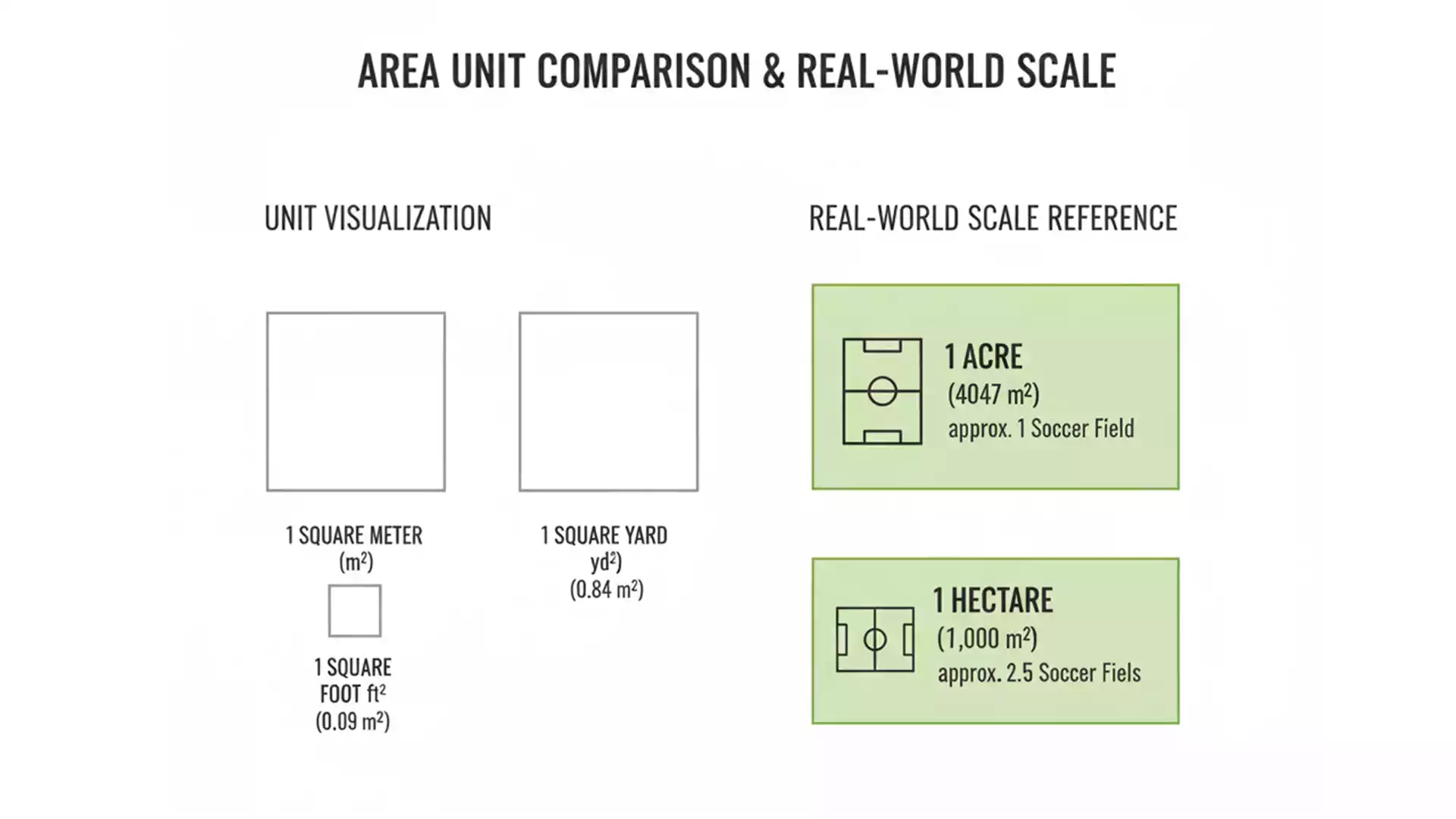
The square meter is the SI unit of area, defined by the International System of Units (SI). It represents a square measuring one meter on each side.
Most countries use square meters for land, rooms, and buildings.
Trusted source:
National Institute of Standards and Technology (NIST) recognizes the square meter as the standard SI area unit.
Square Foot (sq ft)
A square foot measures a square that is one foot long and one foot wide.
The United States commonly uses square feet for:
- Homes
- Apartments
- Commercial spaces
Conversion fact:
1 square meter = 10.7639 square feet
This value is fixed and internationally accepted.
Square Yard (sq yd)
A square yard equals a square with sides of one yard (3 feet).
It often appears in:
- Textile measurements
- Sports fields
- Land estimates
Conversion fact:
1 square yard = 9 square feet
Acre
An acre measures large land areas and remains common in real estate and agriculture, especially in the US.
Key facts:
- 1 acre = 43,560 square feet
- 1 acre ≈ 4,046.86 square meters
This definition has stayed unchanged for decades.
Trusted source:
U.S. National Archives and NIST documentation on land measurements.
Hectare (ha)
A hectare belongs to the metric system and is widely used worldwide.
Key facts:
- 1 hectare = 10,000 square meters
- 1 hectare ≈ 2.471 acres
Farmers, planners, and governments prefer hectares for land assessment.
How an Area Converter Works
An area converter uses predefined mathematical constants. It does not estimate or round randomly.
Here’s the logic:
- The tool converts the input unit into a base unit (usually square meters).
- It then converts that base value into the target unit.
Because these constants come from internationally recognized measurement systems, the output remains consistent across tools and platforms.
No magic. Just math doing its job quietly.
How to Use an Area Converter Correctly
Using an area converter is simple, but mistakes happen when users rush.
Follow these steps:
- Enter the numeric value
- Select the original unit
- Choose the target unit
- Review the result carefully
Always double-check that you selected the correct units. Accidentally choosing square meters instead of square feet can skew results instantly.
Pro tip: If the result looks wildly wrong, it probably is.
Manual Area Conversion vs Online Tools
You can convert area manually using formulas, but tools reduce human error.
Manual Conversion Example
Convert 500 square feet to square meters:
- 1 sq ft = 0.092903 sq m
- 500 × 0.092903 = 46.45 sq m
Manual methods work, but they take time and invite mistakes-especially with larger numbers.
Online Area Converter Benefits
- Instant results
- No formula memorization
- Reduced calculation errors
- Mobile-friendly access
Efficiency beats ego here.
Accuracy Standards Behind Area Conversion
Trusted area converters rely on data from recognized standards organizations, including:
- National Institute of Standards and Technology (NIST)
- International Bureau of Weights and Measures (BIPM)
- ISO measurement standards
These organizations define official conversion constants used worldwide.
When a converter follows these standards, the results remain accurate, consistent, and legally defensible.
Choosing a Reliable Area Converter
Not all tools deserve your trust. A good area converter follows strict rules.
Look for these features:
- Uses SI and imperial standards
- Shows precise decimal values
- Supports multiple units
- Avoids unnecessary rounding
- Works without hidden assumptions
If a tool doesn’t explain units clearly, treat it like a mystery box.
Common Area Conversion Mistakes to Avoid
Even with tools, mistakes happen. Here’s how to avoid them.
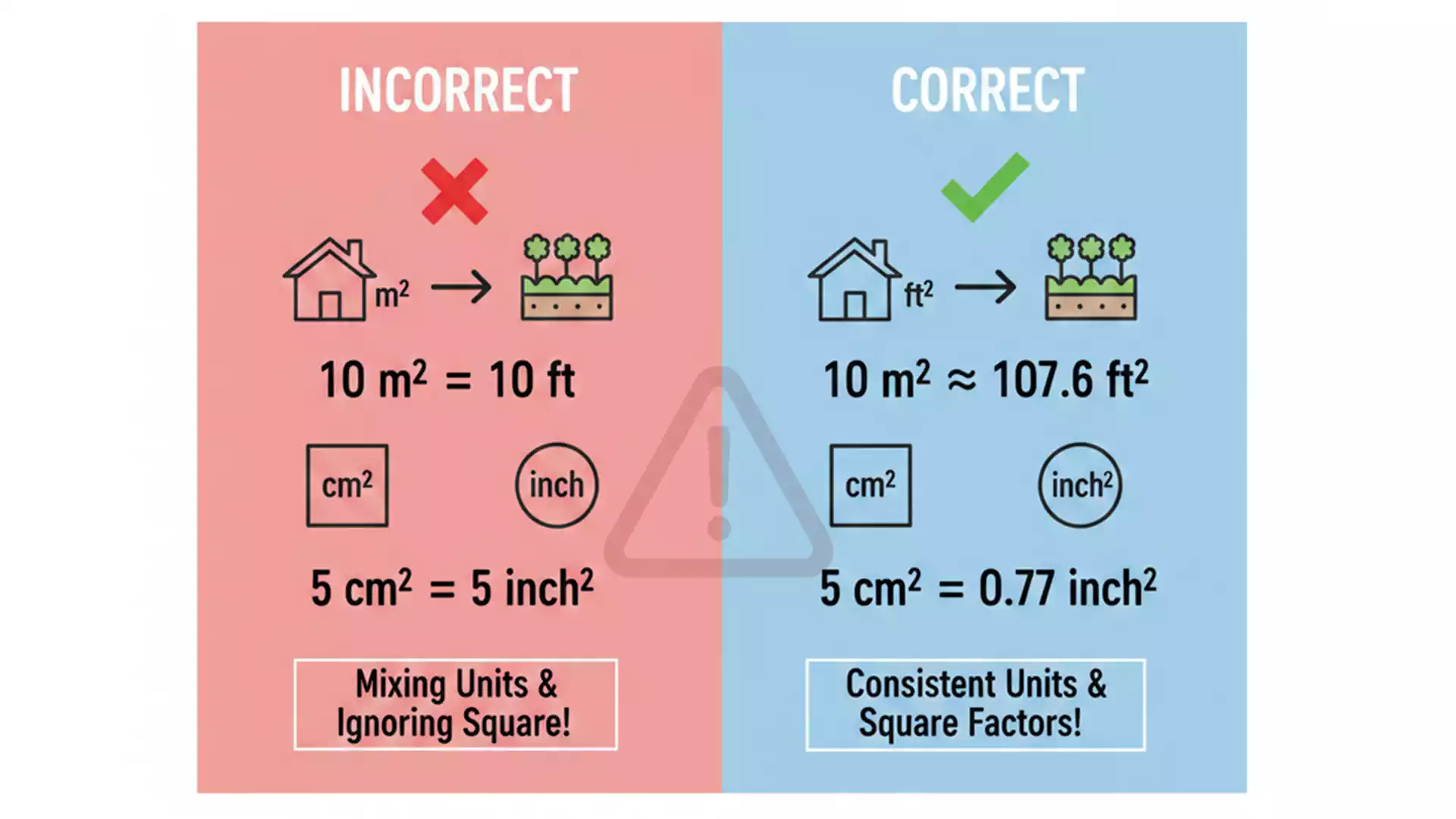
- Mixing linear and area units
- Forgetting that area units are squared
- Assuming regional units mean the same everywhere
- Rounding too early
Example: Converting meters to feet is not the same as converting square meters to square feet. The numbers grow faster than people expect.
An area converter prevents these errors when used properly.
Practical Examples of Area Conversion
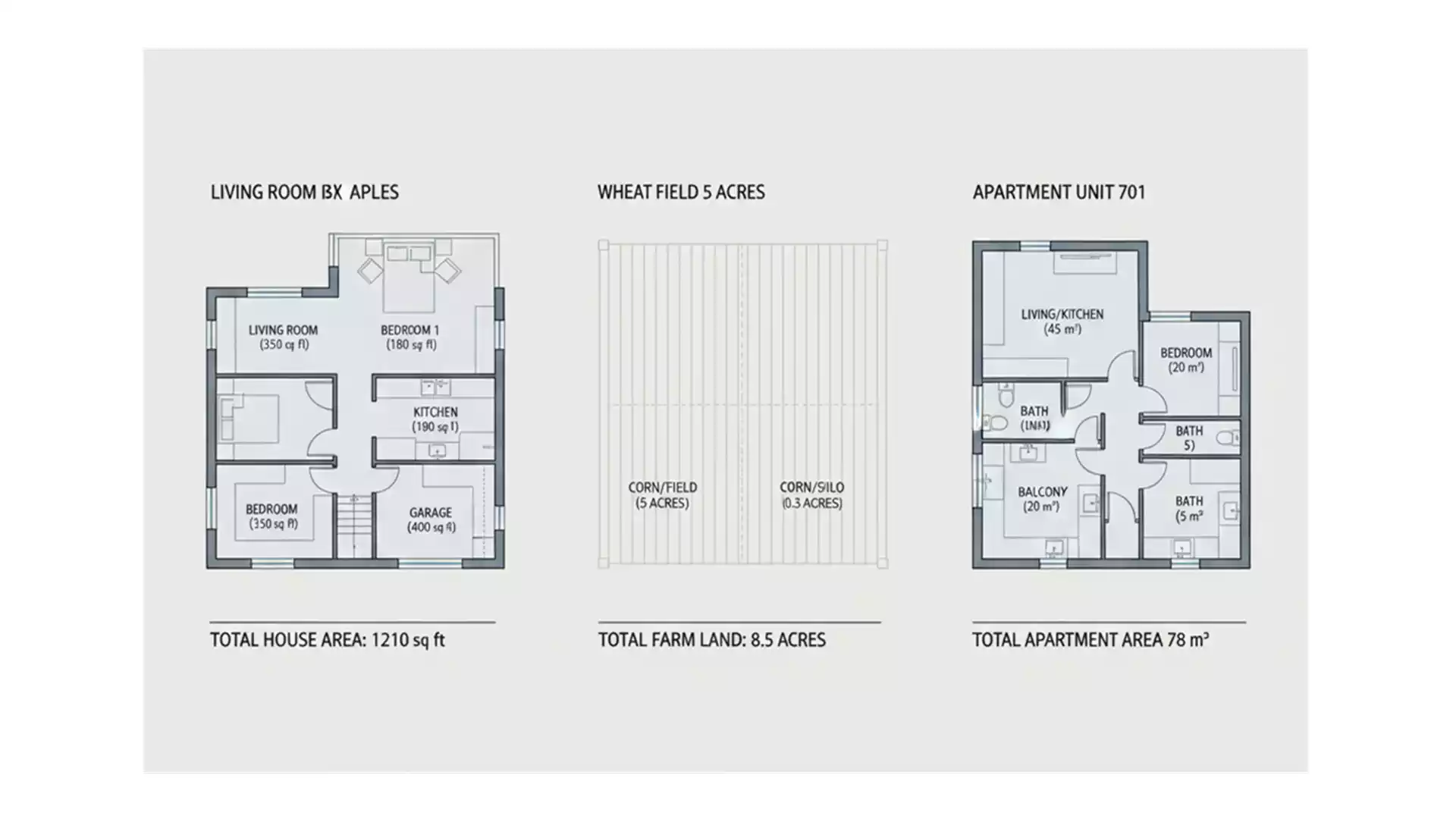
Example 1: Real Estate
A listing shows 120 square meters.
Converted to square feet:
120 × 10.7639 = 1,291.67 sq ft
Now US buyers understand the space instantly.
Example 2: Farming
A farmer owns 3 hectares.
Converted to acres:
3 × 2.471 = 7.41 acres
Clear numbers support better planning.
FAQs About Area Converter
What is the most accurate area unit?
The square meter is the internationally accepted standard unit of area under the SI system.
Is an online area converter reliable?
Yes, as long as it uses recognized conversion constants from trusted standards like NIST or SI units.
Can area conversion results change over time?
No, Measurement definitions remain fixed. A square foot today equals a square foot tomorrow.
Why does the US use square feet instead of square meters?
The US follows the imperial system historically, while most countries adopted the metric system.
Is an acre part of the metric system?
No, The acre comes from the imperial system, though many countries still use it informally.
Do area converters work for irregular shapes?
Area converters only convert units. You must calculate the area first before converting.
Are hectares bigger than acres?
Yes, One hectare equals about 2.471 acres.
Do I need an internet connection for conversion?
Not always, Many calculators work offline once loaded.
Can I use area converters for academic work?
Yes, They follow standardized definitions suitable for education and research.
Why do some tools give slightly different results?
Minor differences come from rounding, not incorrect formulas.
Final Thoughts
An area converter looks simple, but its impact runs deep. From real estate deals to construction projects, from education to agriculture, accurate area conversion supports decisions that matter.
Instead of guessing or relying on memory, use a reliable area converter grounded in trusted measurement standards. It saves time, reduces errors, and builds confidence in your numbers.
Math doesn’t have to be stressful. With the right tools, it becomes dependable-and even a little satisfying.
Trusted Sources and References
- National Institute of Standards and Technology (NIST)
- International Bureau of Weights and Measures (BIPM)
- ISO Measurement Standards
- Encyclopaedia Britannica – Measurement Systems
- SI Unit Definitions (International System of Units)