
Understanding your body fat percentage matters more than watching the scale. Weight alone fails to show how much fat you carry versus muscle, bone, and water. This gap is where the 3-Point Skin Fold Body Fat Calculator shines.
A Simple, Science-Backed Way to Estimate Body Fat Percentage
Fitness professionals, athletes, and everyday health-focused people use this method because it balances accuracy, simplicity, and affordability. You don’t need expensive machines or hospital visits. You only need calipers, basic training, and the right formula.
Let’s break down how it works, why it matters, and how to use it correctly – without confusing jargon or exaggerated claims.
What Is a 3-Point Skin Fold Body Fat Calculator?
A 3-point skin fold body fat calculator estimates your body fat percentage by measuring skinfold thickness at three specific body sites. These measurements reflect the amount of subcutaneous fat stored under the skin.
Researchers Jackson and Pollock developed this method in the 1970s. Exercise scientists still rely on it today because it offers a strong balance between ease and scientific reliability.
Instead of scanning your body or sending electrical signals through it, this method uses real, measurable tissue thickness. No batteries. No software glitches. Just data.
Why Body Fat Percentage Matters More Than Body Weight
Your scale tells you how heavy you are. It does not tell you what you’re made of.
Two people can weigh the same but have very different health profiles. One may carry more muscle, while the other stores more fat. Body fat percentage gives context that weight never will.
Health organizations like the American Council on Exercise (ACE) and CDC emphasize body composition because it links directly to:
- Cardiovascular health
- Metabolic efficiency
- Hormonal balance
- Athletic performance
- Long-term disease risk
In short, body fat percentage paints the real picture.
A reliable body fat percentage calculator helps you move beyond scale weight and focus on how much fat your body actually stores.
How the 3-Point Skin Fold Method Works
This method measures fat at three standardized anatomical sites. The locations differ slightly for men and women because fat distribution patterns differ by gender.
Skin Fold Measurement Sites
For Men:
- Chest
- Abdomen
- Thigh
For Women:
- Triceps
- Suprailiac (hip area)
- Thigh
You measure each site using skinfold calipers. Then, you plug the values into a validated equation to estimate body density, which converts into body fat percentage.
The math stays consistent. The human error stays minimal-when done correctly.
The Science Behind the Formula
The Jackson-Pollock 3-site equations rely on decades of peer-reviewed research. Researchers compared skinfold measurements with hydrostatic weighing, once considered the gold standard for body composition analysis.
Studies published in journals like Medicine & Science in Sports & Exercise confirm that trained users can achieve ±3-4% accuracy, which rivals many modern consumer devices.
That accuracy explains why universities, sports labs, and certified trainers still teach this method.
How Accurate Is the 3-Point Skin Fold Calculator?
Accuracy depends more on technique than the formula itself.
When a trained person takes the measurements correctly:
- Error margins stay low
- Results remain consistent over time
- Progress tracking becomes reliable
In contrast, smart scales and bioelectrical impedance devices fluctuate wildly based on hydration, food intake, and even room temperature.
The skinfold method doesn’t care if you drank water or ate carbs. Fat thickness stays fat thickness.
Knowing your lean body mass allows you to understand how much of your weight comes from muscle, bones, and organs rather than fat alone.
How to Take Skin Fold Measurements Correctly
Technique matters. Rushing ruins accuracy.
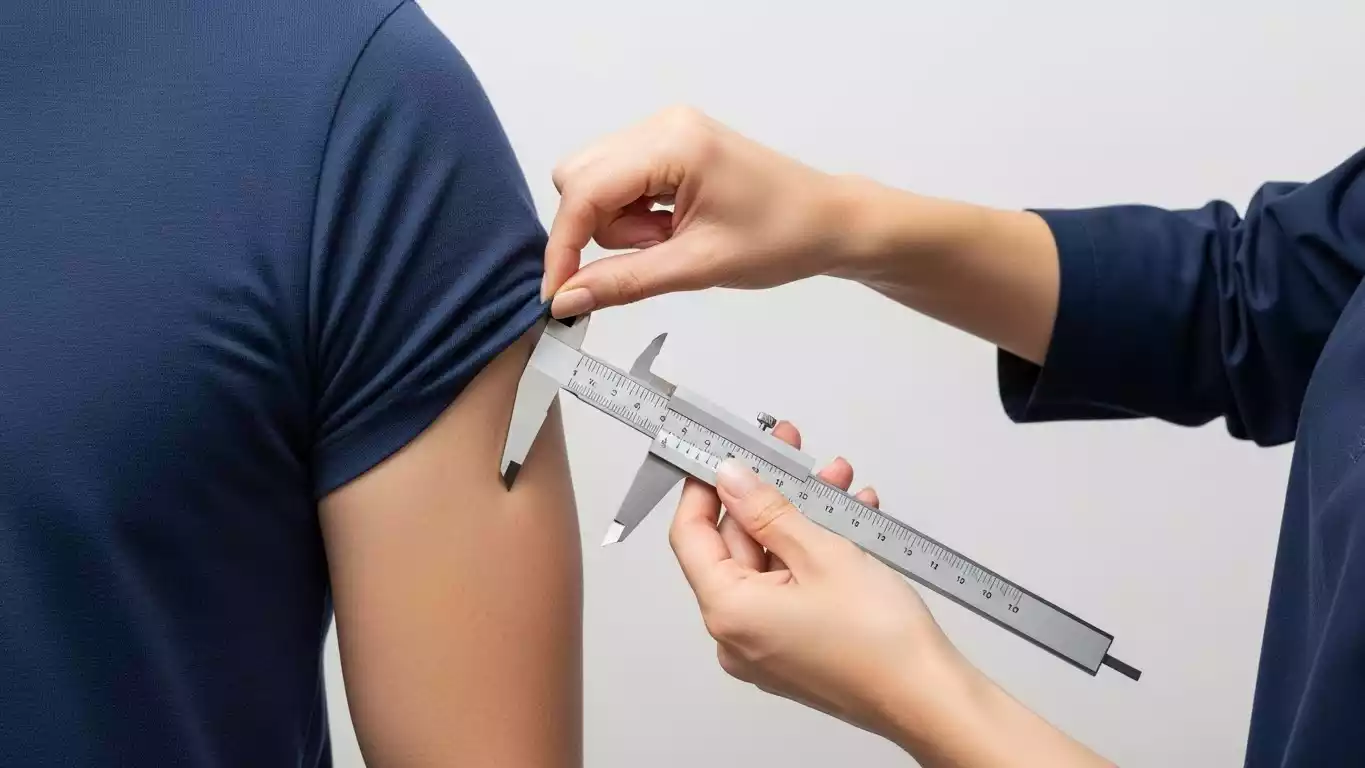
Best Practices for Reliable Results
- Always measure on the right side of the body
- Pinch skin and fat, not muscle
- Place calipers 1 cm below your fingers
- Take each measurement two or three times
- Use the average value
Wait at least 48 hours between measurements when tracking progress. Fat loss doesn’t happen overnight, even if motivation does.
Combining skin fold measurements with consistent weight loss progress tracking gives a more realistic view of fat reduction over time.
Who Should Use a 3-Point Skin Fold Body Fat Calculator?
This method works best for:
- Fitness enthusiasts
- Athletes
- Personal training clients
- Weight-loss programs
- Research and academic settings
It may not suit individuals with very high obesity levels because calipers have physical limits. In those cases, medical-grade assessments work better.
For most healthy adults, this method delivers dependable insight without draining your wallet.
Advantages of the 3-Point Skin Fold Method
Let’s keep it honest and practical.
Key Benefits
- Backed by decades of research
- Affordable and accessible
- No electricity or software required
- Consistent for progress tracking
- Less affected by hydration or meals
The method respects physics and physiology instead of guessing based on electrical resistance.
Limitations You Should Know About
No method claims perfection, and this one doesn’t either.
Realistic Limitations
- Requires proper training
- Depends on caliper quality
- Less accurate if rushed
- Not ideal for extreme obesity
Still, when compared fairly, the benefits far outweigh the drawbacks for most users.
3-Point vs Other Body Fat Measurement Methods
Let’s compare without marketing hype.
| Method | Accuracy | Cost | Reliability |
| 3-Point Skin Fold | High (trained user) | Low | High |
| Bioelectrical Scale | Low–Moderate | Low | Variable |
| DEXA Scan | Very High | High | High |
| Bod Pod | High | High | High |
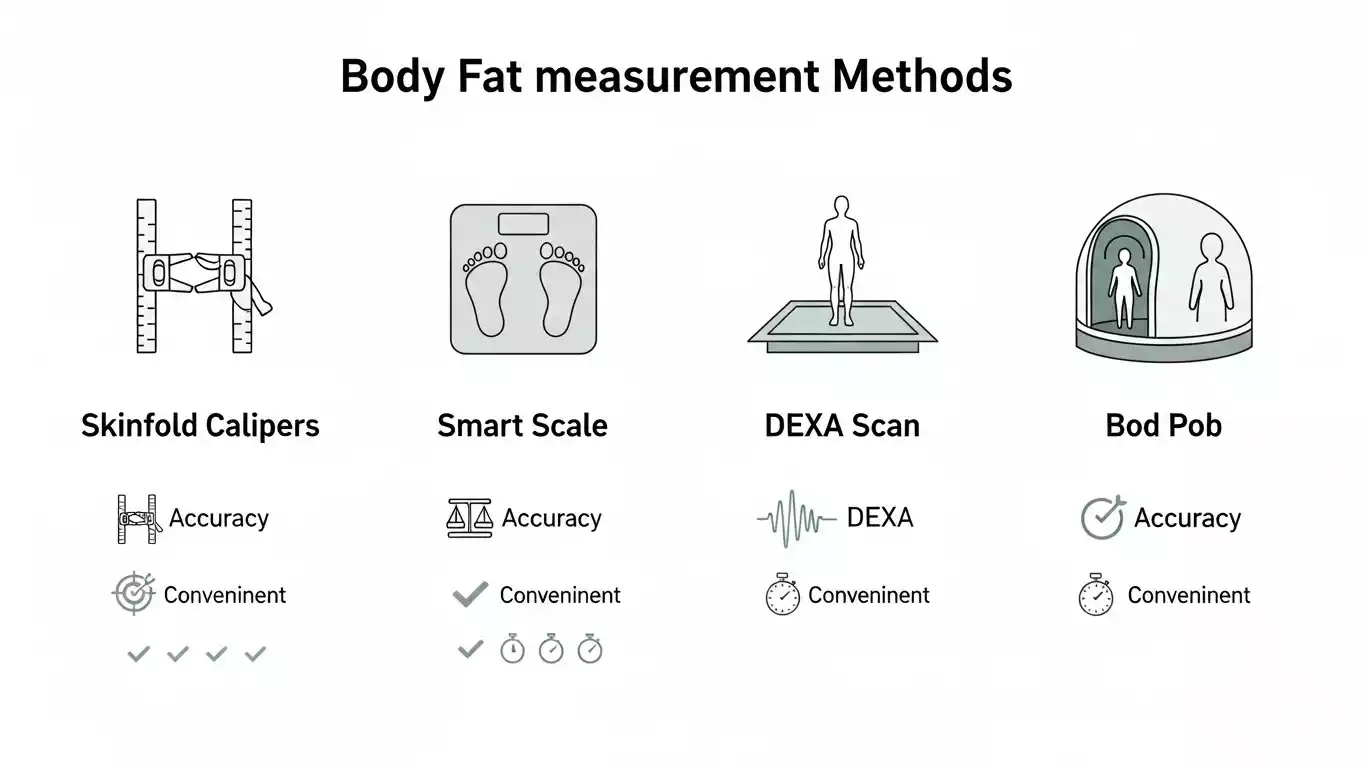
For everyday health tracking, the 3-point method sits in the sweet spot.
Many people still rely on BMI to assess health, but understanding the difference between BMI vs body fat percentage helps explain why body composition provides a clearer picture than weight-based formulas.
How Often Should You Measure Body Fat?
Once every 3-4 weeks works best.
Measuring too often leads to frustration, not insight. Fat loss takes time, not daily check-ins. Think marathon, not sprint – unless you sprint for cardio.
Common Mistakes to Avoid
People don’t fail because of the method. They fail because of shortcuts.
Avoid these errors:
- Measuring immediately after workouts
- Using cheap or damaged calipers
- Pinching muscle tissue
- Switching measurement sites
- Comparing results from different methods
Consistency beats perfection every time.
Is the 3-Point Skin Fold Method Safe?
Yes. When used correctly, it’s completely non-invasive and safe.
Health and fitness organizations like ACSM (American College of Sports Medicine) recognize skinfold assessments as standard practice in fitness evaluations.
No radiation. No electrical currents. Just skin and science.
Trusted Scientific Sources Behind This Method
This article relies on established, peer-reviewed and institutional sources, including:
- Jackson, A.S., & Pollock, M.L. – Generalized equations for predicting body density
- American College of Sports Medicine (ACSM)
- American Council on Exercise (ACE)
- National Institutes of Health (NIH)
- Centers for Disease Control and Prevention (CDC)
These organizations set the standards used in modern fitness assessments.
Final Thoughts: Should You Use a 3-Point Skin Fold Body Fat Calculator?
If you want a reliable, science-based, and affordable way to track body fat, the answer stays simple-yes.
This method doesn’t chase trends. It relies on anatomy, math, and consistency. When you use it correctly, it gives you something far more valuable than a number: clarity.
Understanding your daily calorie needs helps align nutrition intake with body fat goals, especially when aiming for gradual and sustainable fat loss.
And clarity beats guesswork every single time.
Frequently Asked Questions (FAQs)
1. Is the 3-point skin fold test accurate?
Yes, trained users can achieve accuracy within ±3-4%, according to exercise science research.
2. Do I need professional training to use it?
Basic instruction helps. Many errors come from poor technique, not the formula.
3. Can beginners use this method?
Yes, with practice and proper guidance.
4. How long does the test take?
Usually under 5 minutes.
5. Does hydration affect results?
No. Unlike smart scales, hydration has minimal impact.
6. Is this method better than BMI?
Yes. BMI ignores body composition entirely.
7. Can women and men use the same formula?
No. Each uses gender-specific equations.
8. How often should I test body fat?
Every 3-4 weeks works best.
9. Can I track fat loss with this method?
Yes, consistency makes it ideal for progress tracking.
10. Is it safe for all ages?
Healthy adults can use it safely. Medical advice helps for special conditions.